IPTV & Media
Choosing Lawful Sources for an IPTV Player
Evaluate IPTV source permissions, provider claims, regional conditions and private media rights before importing a playlist into a player.
A lawful IPTV source is one you are entitled to receive and use in the intended way. The playlist format does not decide that question. An M3U URL, a provider login and an HLS stream can each point to authorised or unauthorised material. Check the source owner, distribution permission and applicable terms before importing a large catalogue.
Rights depend on the content, territory and use. This is a practical screening process rather than a legal determination for every country. When permission is unclear, obtain a clear answer from the rights holder or a qualified local adviser instead of treating technical access as consent.
Separate the Player from the Service
A media player reads sources and renders supported content. It does not necessarily operate the channels, sell the subscription or hold the distribution rights. The VideoLAN M3U reference describes a playlist as a technical structure; that structure contains no universal certificate of ownership.
This distinction matters when evaluating an app such as CarCast. The existence of an import field does not mean every link found online is included, approved or licensed. Verify the actual source independently from the player and confirm the application's documented compatibility for your intended setup.
Also distinguish private personal use from public exhibition, redistribution or business use. A permission that allows viewing on your own device may not allow broadcasting the same programme to customers, republishing its URL or building a public channel directory around it.
Prefer Sources with an Identifiable Rights Chain
Start with material you created, an authorised broadcaster's supported service, or a provider that clearly explains what it distributes and where. Look for an identifiable operator, current contact details, transparent terms and a credible explanation of its rights. A familiar logo on a sales page is not that explanation.
The U.S. Copyright Office's introduction explains the basic rights associated with copyrighted works. WIPO's copyright resources provide an international starting point. National law and licence terms determine the details, so neither resource turns an anonymous playlist into a verified lawful service.
If a provider claims a licence, ask which territory and use it covers. A vague statement that everything is legal worldwide is not a substitute for a specific, accountable answer about the content you plan to access.
Free Access Is Not the Same as Open Permission
A channel may be free to watch through its official site while restricting third-party extraction, rebroadcasting or commercial display. Likewise, a public URL can be reachable without being intended for redistribution. Technical accessibility and legal permission are separate facts.
Check whether the rights holder offers a documented stream, app or partner workflow for the intended device. Follow that supported method. Do not assume that finding an M3U8 address in a web page grants permission to reuse it in another player or share it publicly.
Public-domain or openly licensed material can be useful when its status is established for your jurisdiction. Keep the actual licence and attribution requirements with the source. The words free, open and public in a filename or forum post are claims to examine, not proof of a particular legal status.
Check Territory, Account and Display Conditions
A subscription can have limits on country, household, simultaneous streams or approved devices. Travel may change which content is available. Verify those conditions before depending on the source over mobile data or while away from home. A successful login is not a promise of access in every location.
External output can have separate conditions. Some services require their official app, apply DRM or restrict capture and casting. A generic player or receiver cannot guarantee that those restrictions disappear. Use the permitted workflow rather than trying to turn a protected service into an unrestricted playlist.
For vehicle-related use, confirm compatibility and local road-use rules. Keep visual media to a lawful parked or passenger setting with an appropriate display. Content permission does not itself establish that dashboard video is safe, supported or legal in a moving vehicle.
Treat Warning Signs as Questions to Resolve
An anonymous seller offering an implausibly large worldwide premium catalogue for a tiny fee deserves careful scrutiny. Missing operator details, unclear terms and pressure to pay through irreversible methods make it harder to establish accountability. These signs do not alone adjudicate a service, but they leave important questions unanswered.
Ask for the supported access method, refund terms, privacy information and distribution territory. If the response focuses only on channel counts or a temporary demonstration, the rights question remains open. A working preview establishes playback at that moment, not authority to distribute the programme.
Do not publish allegations without evidence. You can simply decline to use a source whose permission you cannot establish. A smaller catalogue with a clear lawful basis is more useful than a larger list whose availability and rights are uncertain.
Protect Authorised Sources from Accidental Sharing
Even a legitimate subscription can be compromised when its playlist contains credentials or signed URLs. Keep source files in private storage, redact screenshots and avoid uploading complete lists to public troubleshooting tools. See handling private playlist links for the practical risks.
Do not share account-bearing links with passengers or collaborators unless the terms permit that use. A copied file can preserve reusable access long after the original message is deleted. If a link leaks, ask the provider how to revoke or rotate it.
If you maintain a household media server, create suitable user access rather than distributing an administrator's credentials. Permission to view a library does not automatically include permission to redistribute every item within it. Keep content ownership and server access management as separate responsibilities.
Keep a Small Permission Record
For each source you rely on, retain the operator, original official link, relevant terms or licence, territory and retrieval date. You do not need to copy confidential contracts into a player. The aim is to retain enough information to revisit the decision when a service changes its rules or ownership.
For media you created, document any third-party elements such as music or footage. Owning the server does not automatically clear rights in all files stored on it. For shared or business use, obtain the permissions that match that setting.
Read what an M3U playlist is to separate the file from its referenced content. Then make the source decision on accountable permission and current terms, rather than on the convenience of a link or the size of a channel list.
Sources
Related reading
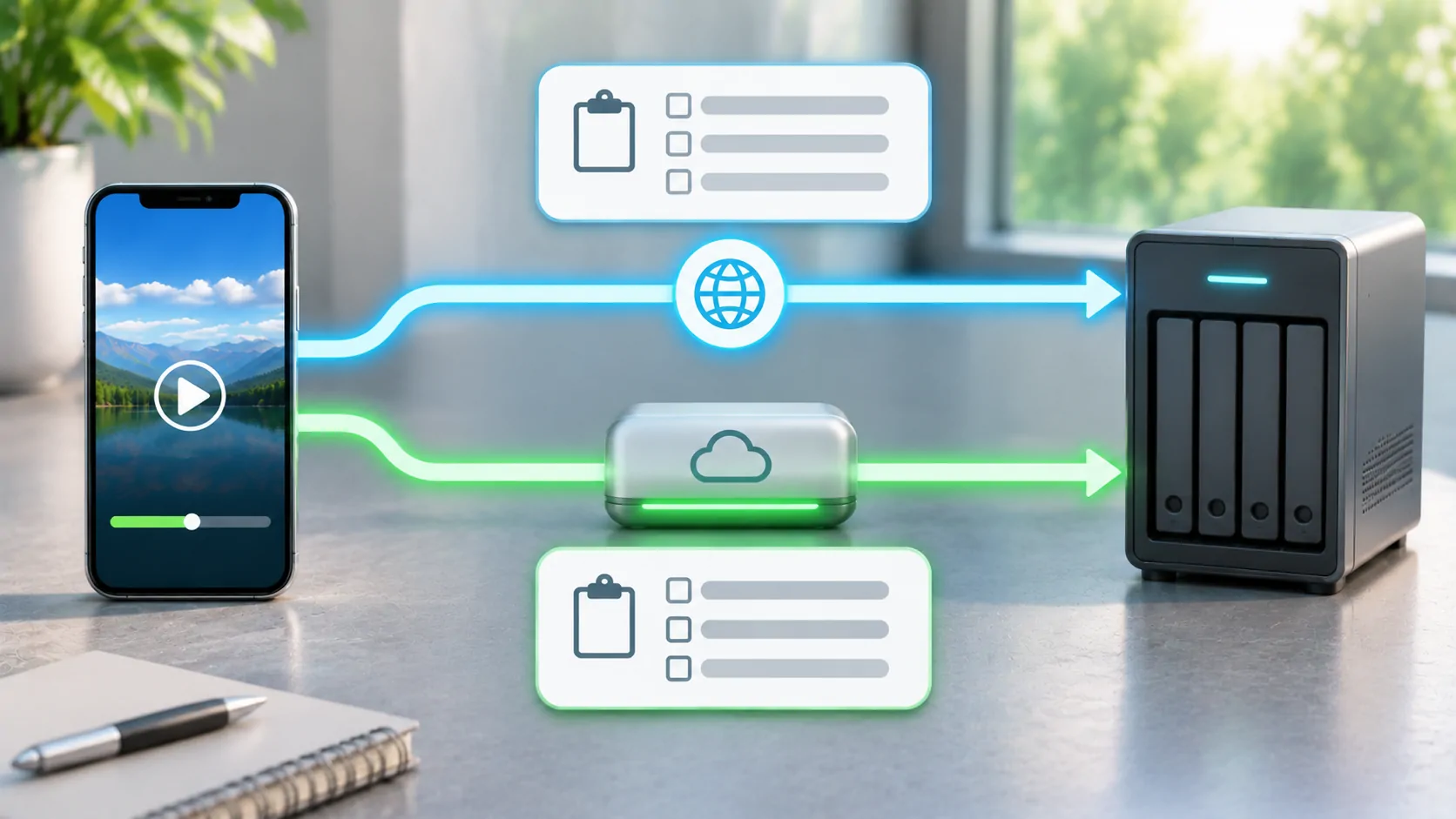
Bring your own media.
Explore CarCast for iPhone with your own authorized sources and supported display configurations.