IPTV & Media
What an HLS Playlist Contains, and Why Streaming Uses Segments
A short manifest coordinates many media requests. Here is how the pieces fit together.
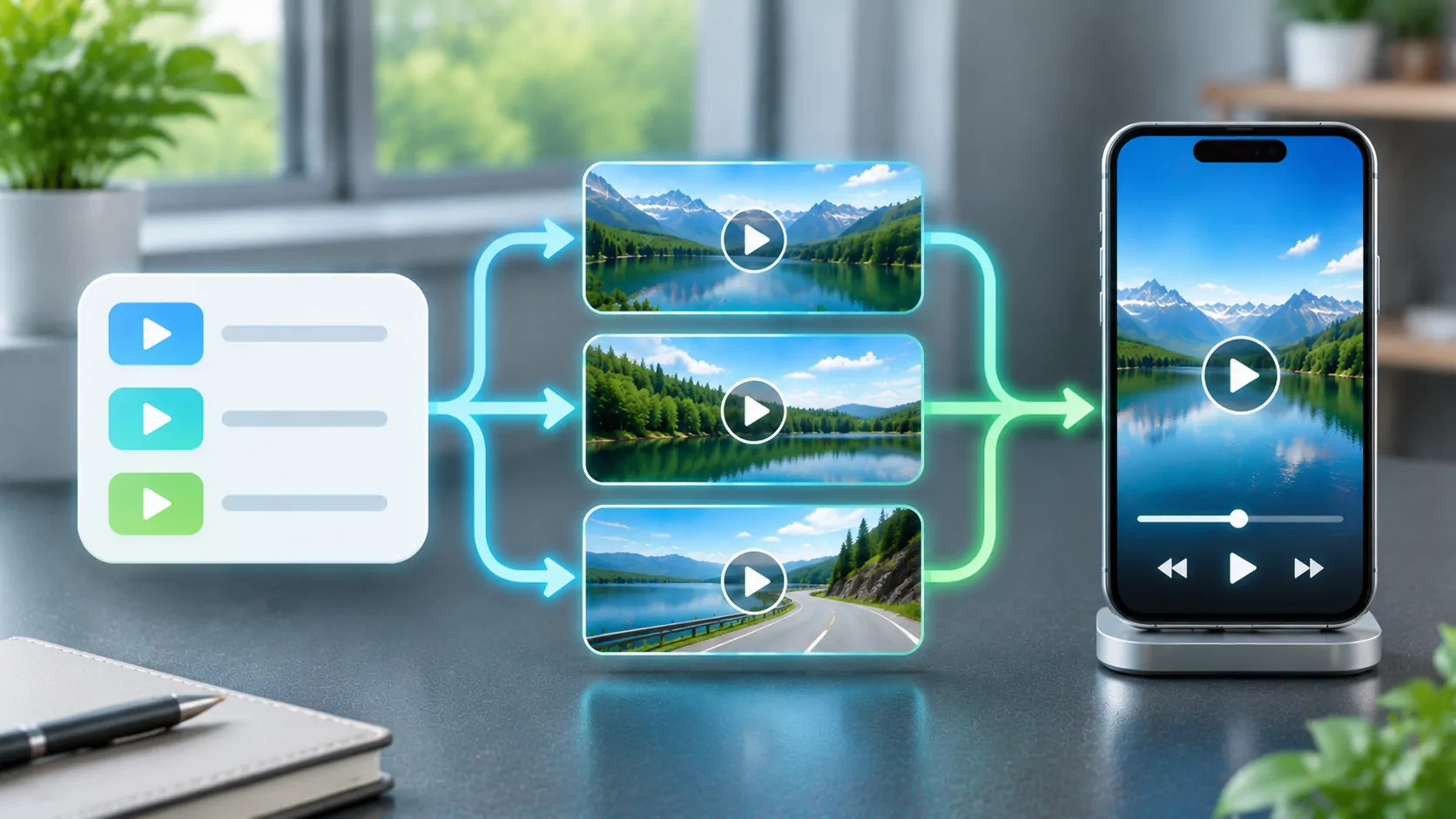
The manifest is the index
HLS stands for HTTP Live Streaming. Instead of requiring one uninterrupted download of an entire programme, it describes media in playlists and retrieves the required pieces over HTTP. Apple describes HLS as a way to deliver live and on-demand media using ordinary web servers and content delivery networks.
The playlist is often called a manifest. It is text, not a container holding all of the video. Saving that text alone is therefore not an offline copy of the programme. The player still needs access to the referenced media and any authorisation required to use it.
A small example
This deliberately non-working example illustrates the structure without distributing a real stream:
#EXTM3U
#EXT-X-TARGETDURATION:6
#EXTINF:6.0,
segment-001.ts
#EXTINF:6.0,
segment-002.ts
#EXT-X-ENDLIST
#EXTM3U identifies the playlist format. Each #EXTINF line describes a segment's duration, followed here by the segment's relative address. #EXT-X-ENDLIST indicates that no more media segments will be added to that media playlist. The details and requirements are defined in RFC 8216, an informational description of the protocol.
Real playlists can contain more tags, different segment formats, encryption information or separate audio renditions. Editing a few lines is not a reliable way to convert one of those streams into a format a different player supports.
Variants are different from segments
A multivariant playlist describes alternative presentations of the same content. For example, a provider may offer several resolutions and bitrates. The selected media playlist then identifies the sequence of segments for that version.
Adaptive streaming lets a compatible player respond to changing network conditions by selecting among available variants. It cannot create a lower bitrate that the publisher never provided. A player may buffer when available throughput is insufficient, the server is slow, or a segment request fails.
Why a playlist can load while playback fails
Loading the first text file only proves that one request succeeded. Later requests may go to another host, use expired credentials, require a missing media segment, or encounter an unsupported audio or video format. The first useful troubleshooting question is whether the failure occurs before the catalogue loads, when playback starts, or after several minutes.
If you control the source, Apple's HLS resources include authoring guidance and validation tools. If a provider controls it, report a redacted error and the time it happened. Do not post a full signed playlist address to a public support thread.
For CarCast, separate playlist setup from display compatibility. An HLS manifest being valid does not establish that video is available on a given vehicle. Any supported in-car viewing is for a parked vehicle and remains subject to the content's permissions.
Sources
Related reading


Bring your own media.
Explore CarCast for iPhone with your own authorized sources and supported display configurations.